Drainage Falls, Access Points and Cleanouts
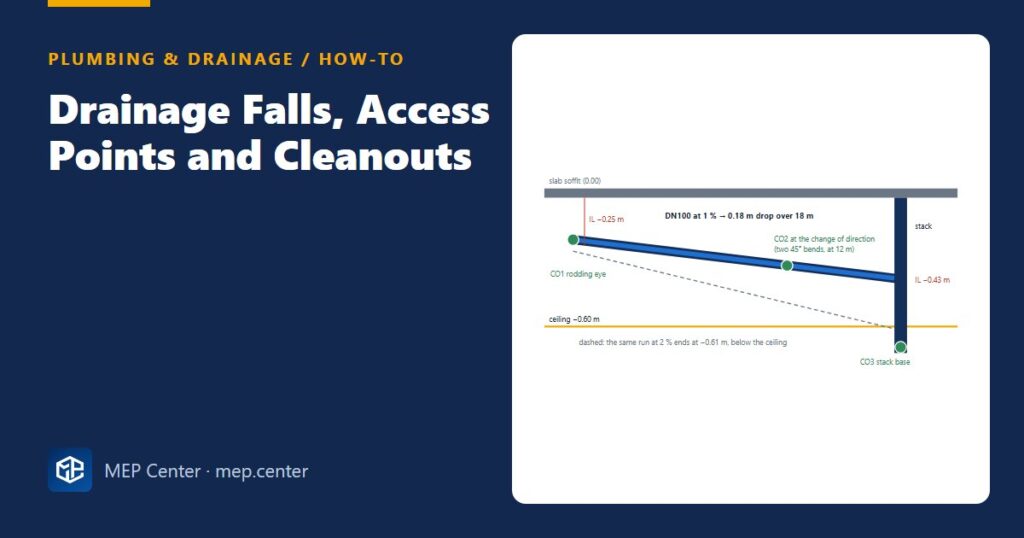
How to set drainage falls from the outfall upstream, check them against the void, and place cleanouts and access points that can actually be used.
Drainage Falls, Access Points and Cleanouts Read More »

Practical plumbing and drainage design: pipe sizing, drainage, venting, hot water, tanks and pumps — EN and US practice.
How to set drainage falls from the outfall upstream, check them against the void, and place cleanouts and access points that can actually be used.
Drainage Falls, Access Points and Cleanouts Read More »
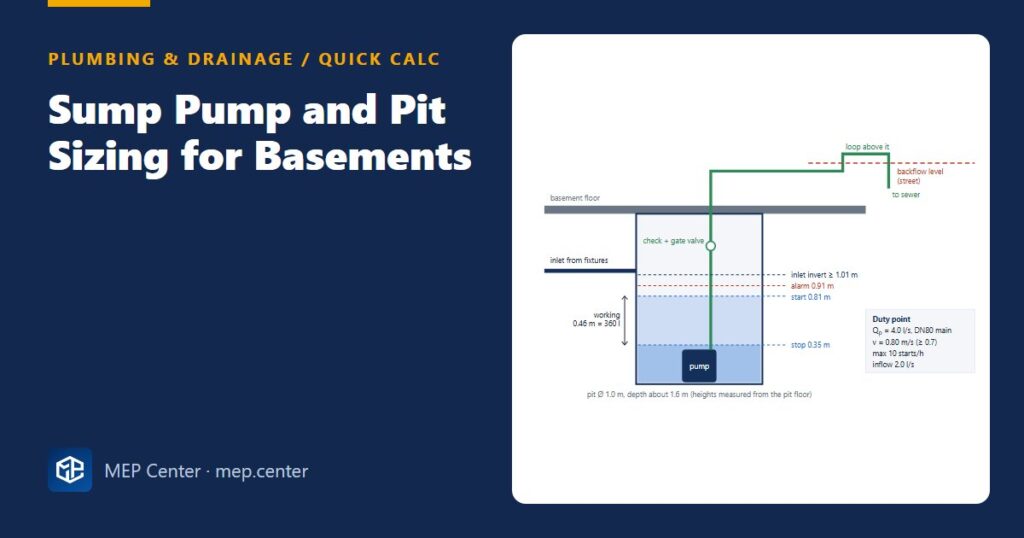
Size a basement sump pump and pit: peak inflow, rising main velocity, the V = Qp × T ÷ 4 working volume and the level stack, with a worked example.
Sump Pump and Pit Sizing for Basements Read More »
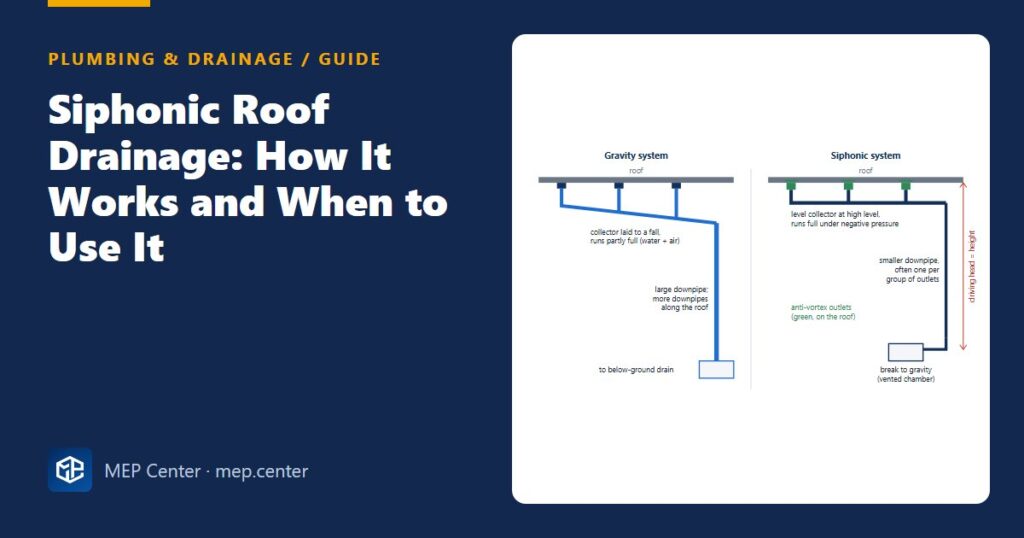
How siphonic (full-bore) roof drainage works, how it compares with gravity drainage, what the hydraulic design must check and when it is worth using.
Siphonic Roof Drainage: How It Works and When to Use It Read More »
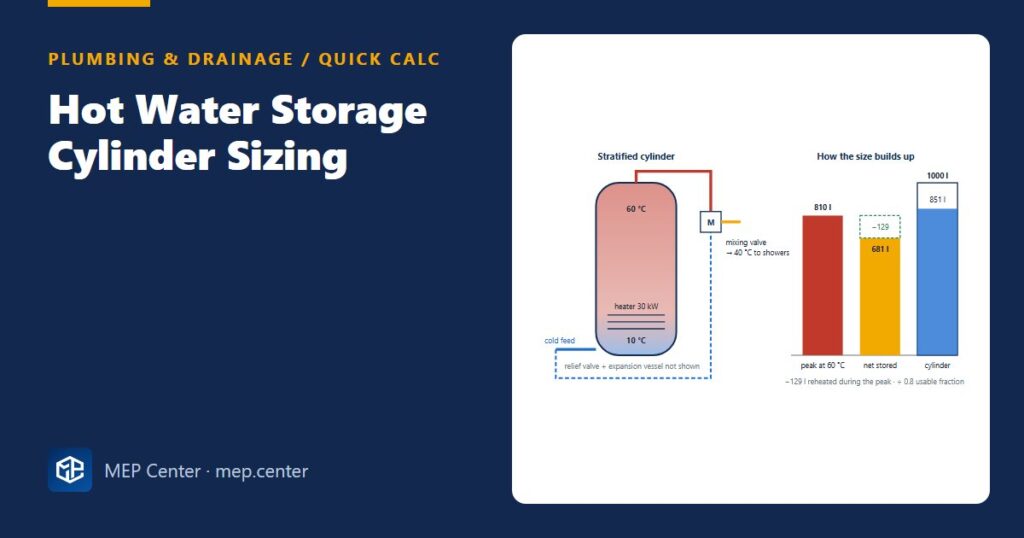
Size a hot water cylinder from peak demand, heater recovery and usable volume, with a worked sports changing room example and rule-of-thumb volumes.
Hot Water Storage Cylinder Sizing Read More »
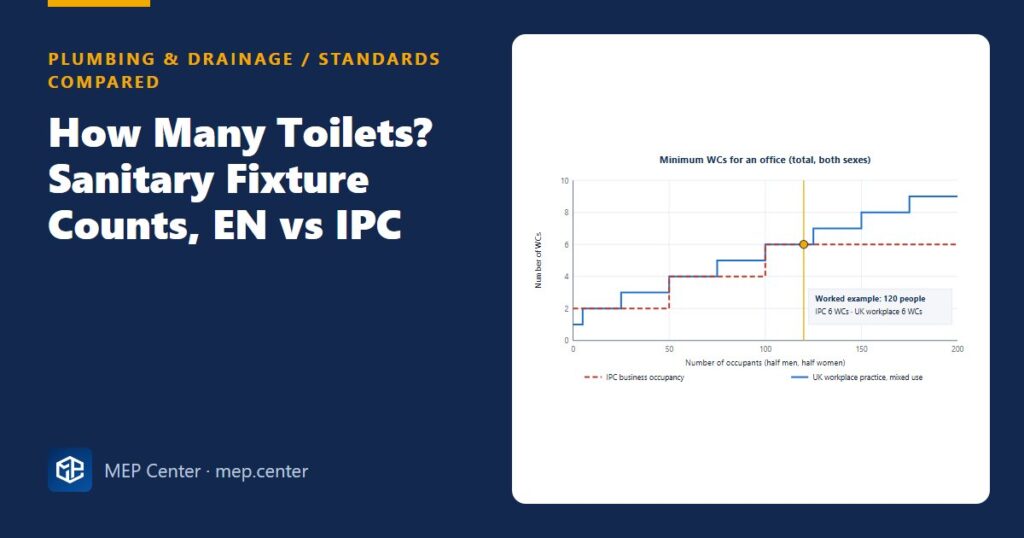
Where minimum toilet and washbasin numbers come from under the IPC and in Europe, with a 120-person office calculated both ways.
How Many Toilets? Sanitary Fixture Counts, EN vs IPC Read More »
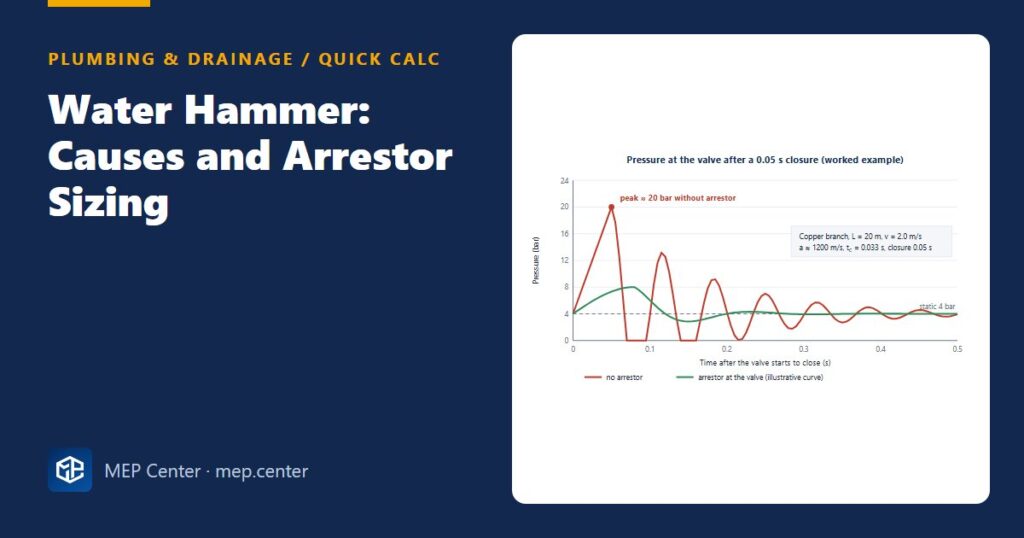
Why quick-closing valves cause water hammer, how big the surge is (Δp = ρ·a·Δv) and how to size and place arrestors, with a worked solenoid valve example.
Water Hammer: Causes and Arrestor Sizing Read More »
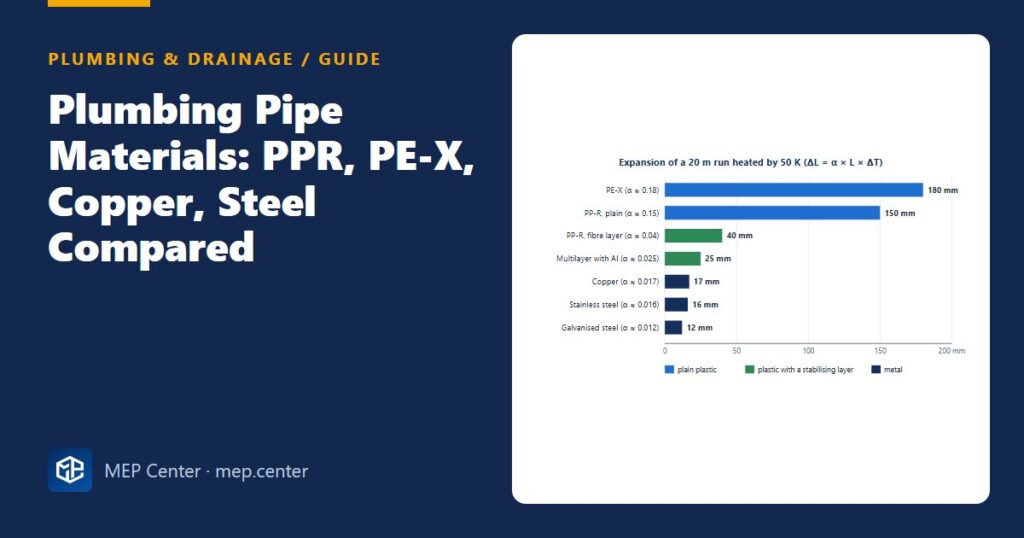
How to choose between PP-R, PE-X, multilayer, copper, stainless and galvanised steel for building water services: temperature, expansion, bore and water quality.
Plumbing Pipe Materials: PPR, PE-X, Copper, Steel Compared Read More »
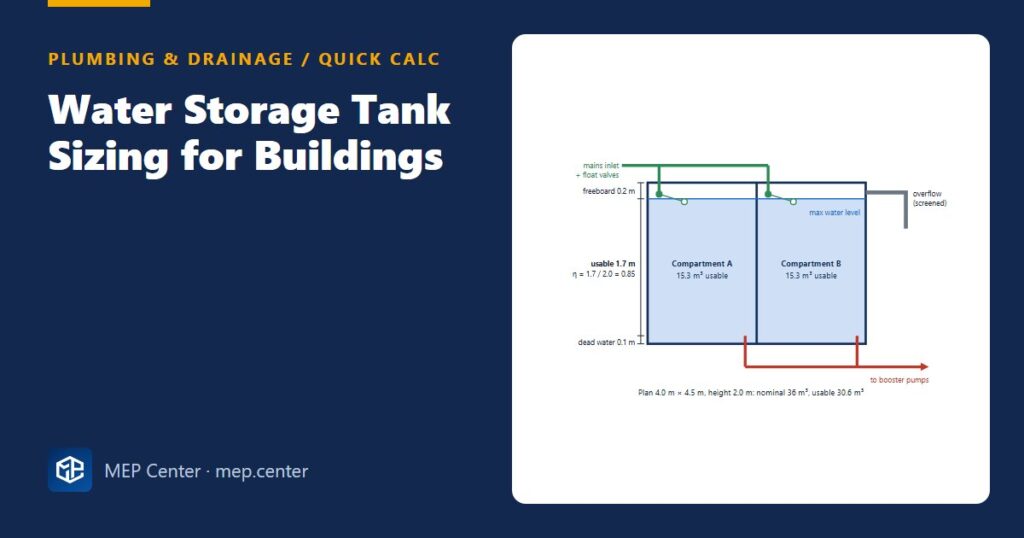
Size a building’s cold water storage tank from users, daily demand and storage period, then convert usable volume to a real two-compartment tank.
Water Storage Tank Sizing for Buildings Read More »
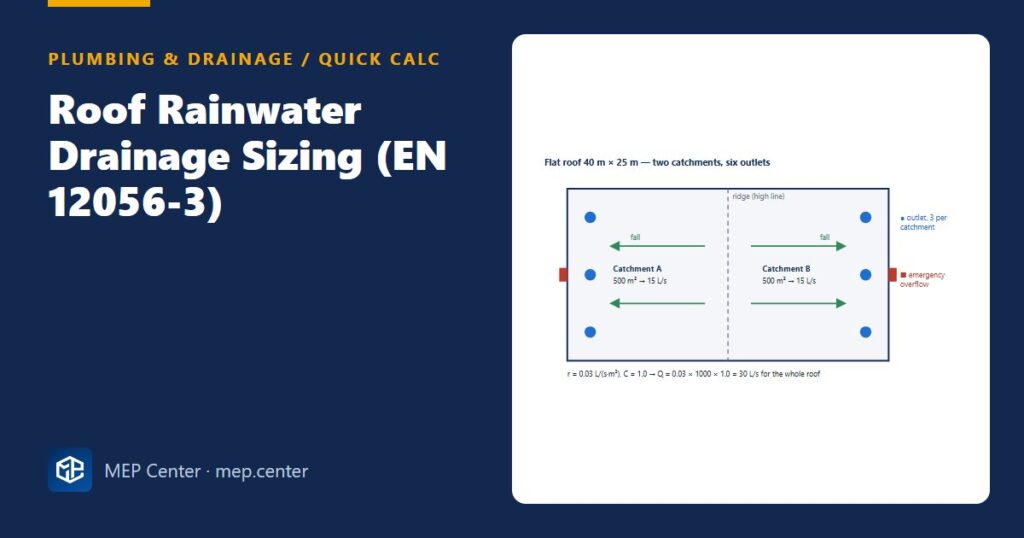
Size roof outlets, downpipes and overflows with the EN 12056-3 method Q = r × A × C, with a worked flat-roof example and a quick flow table.
Roof Rainwater Drainage Sizing (EN 12056-3) Read More »
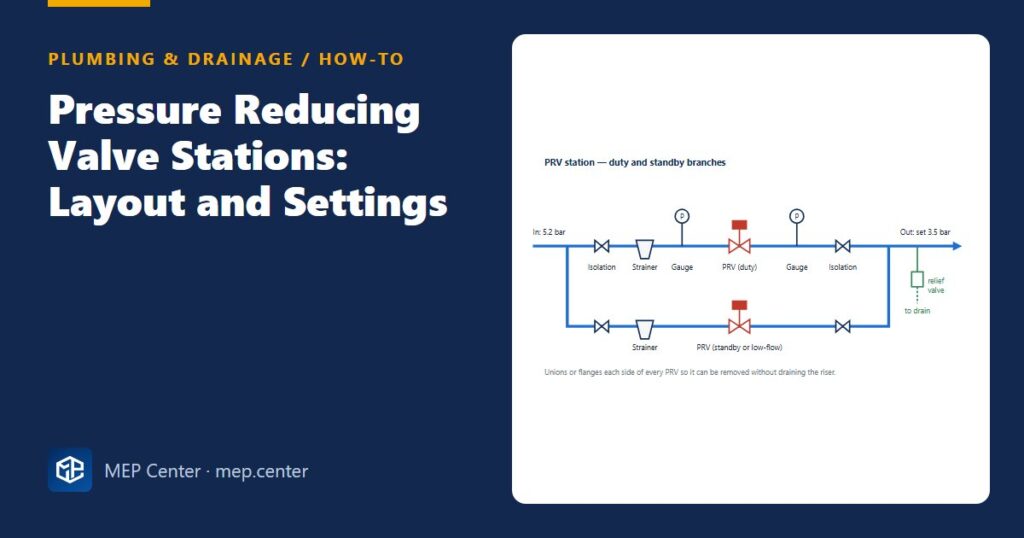
How to lay out and set a PRV station for a building’s water supply: pressure zones, set pressure, sizing, parallel branches and commissioning.
Pressure Reducing Valve Stations: Layout and Settings Read More »