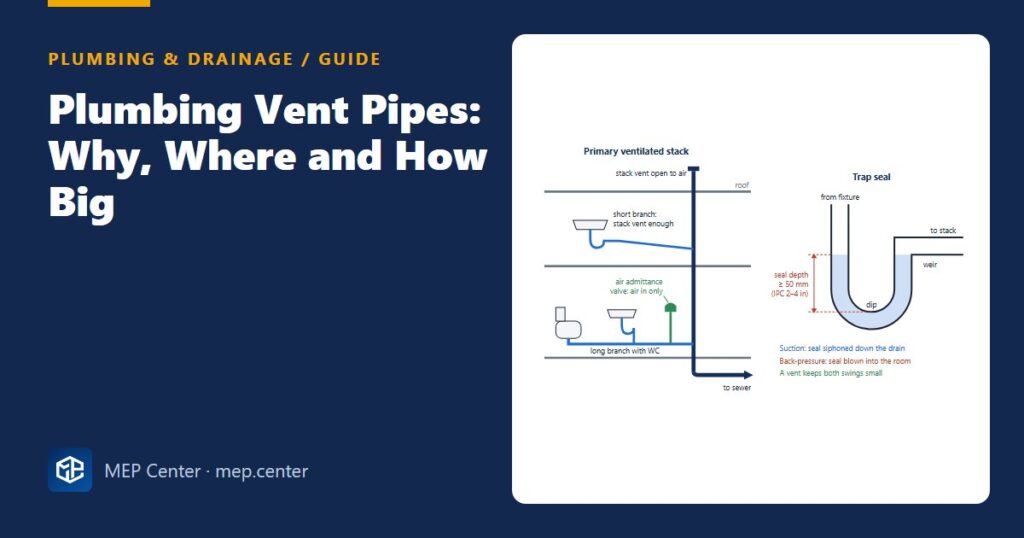
Plumbing Vent Pipes: Why, Where and How Big
Why drainage needs vents, which vent type to use where, how big a vent must be under the IPC and EN 12056, and the limits of air admittance valves.
Plumbing Vent Pipes: Why, Where and How Big Read More »

Practical plumbing and drainage design: pipe sizing, drainage, venting, hot water, tanks and pumps — EN and US practice.
Why drainage needs vents, which vent type to use where, how big a vent must be under the IPC and EN 12056, and the limits of air admittance valves.
Plumbing Vent Pipes: Why, Where and How Big Read More »
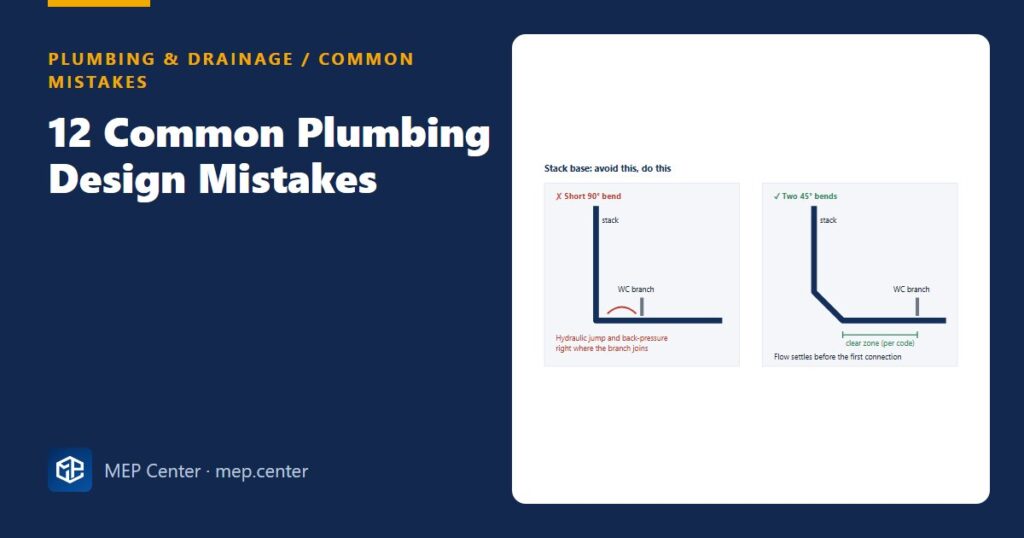
The twelve plumbing design mistakes we see most on drawings, from demand and pressure to stacks, vents, falls and access, and what to do instead.
12 Common Plumbing Design Mistakes Read More »
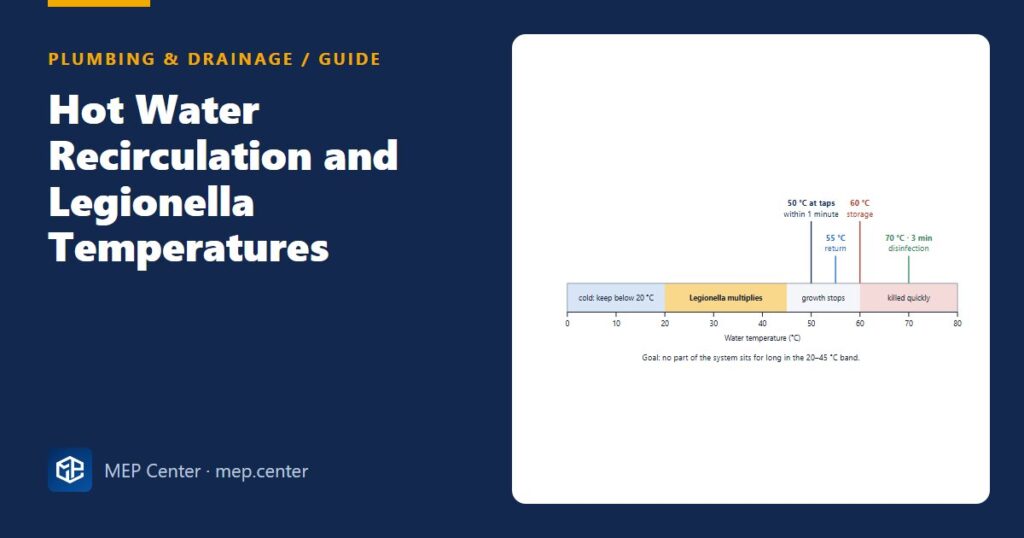
The temperatures that keep legionella out of hot water systems, when a recirculation loop is needed, and how to size its flow from the pipe heat loss.
Hot Water Recirculation and Legionella Temperatures Read More »
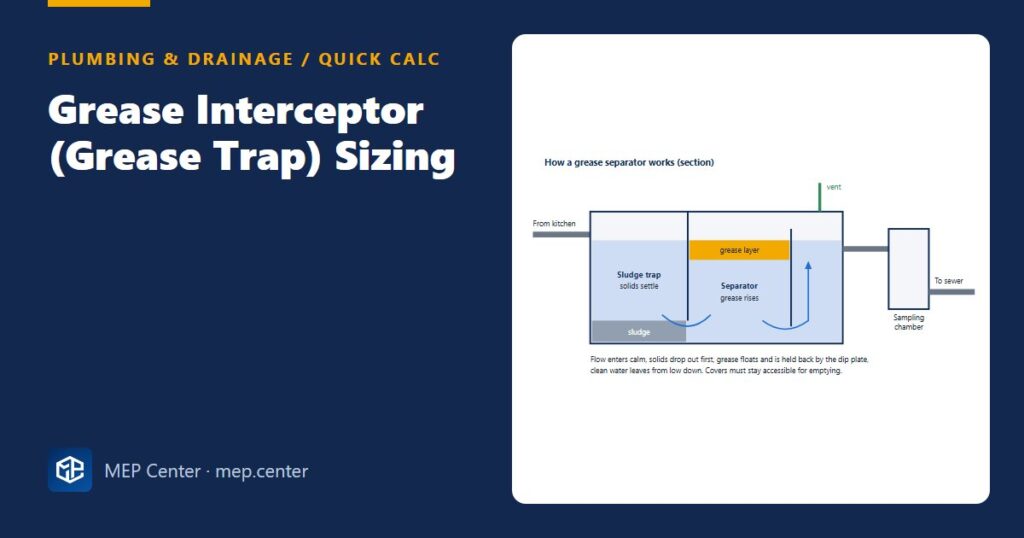
Size a commercial kitchen grease separator with EN 1825-2 (NS = Qs × ft × fd × fr) or the US sink drain-down method, with worked examples and layout rules.
Grease Interceptor (Grease Trap) Sizing Read More »
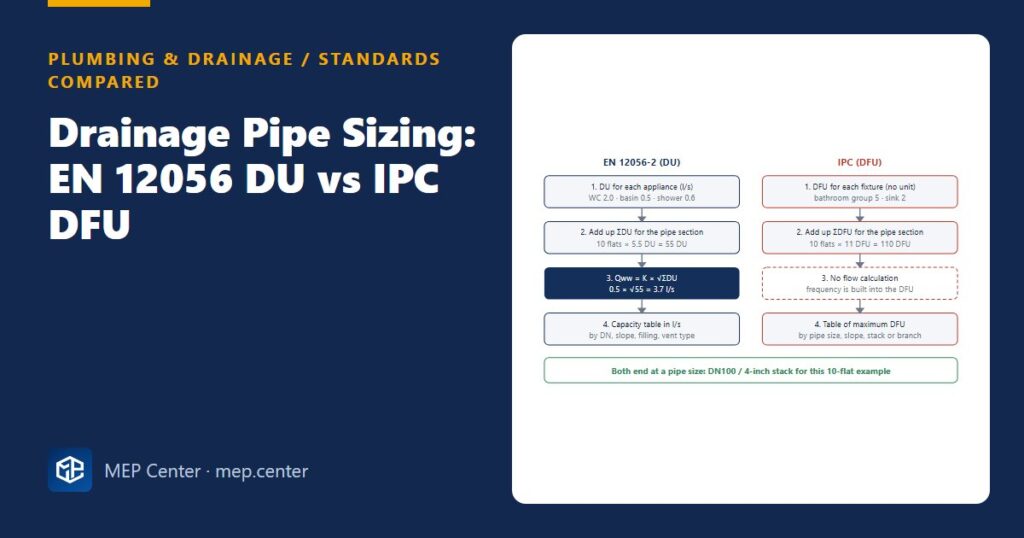
EN 12056 discharge units and IPC drainage fixture units side by side: how each turns fixtures into a pipe size, and the same 10-flat stack sized both ways.
Drainage Pipe Sizing: EN 12056 DU vs IPC DFU Read More »
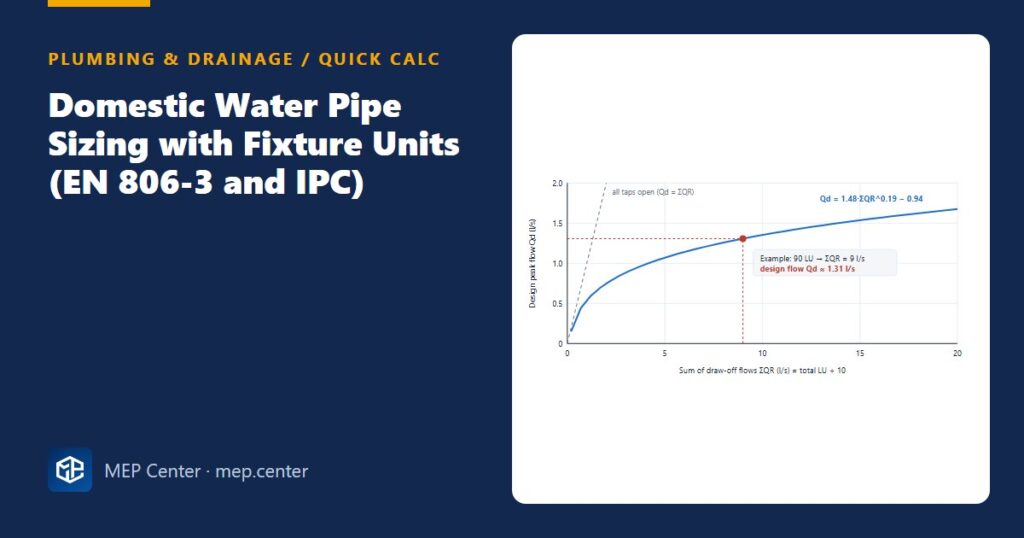
How to turn a list of fixtures into a realistic peak flow and a pipe size with EN 806-3 loading units or IPC fixture units, with a worked 10-flat riser example.
Domestic Water Pipe Sizing with Fixture Units (EN 806-3 and IPC) Read More »
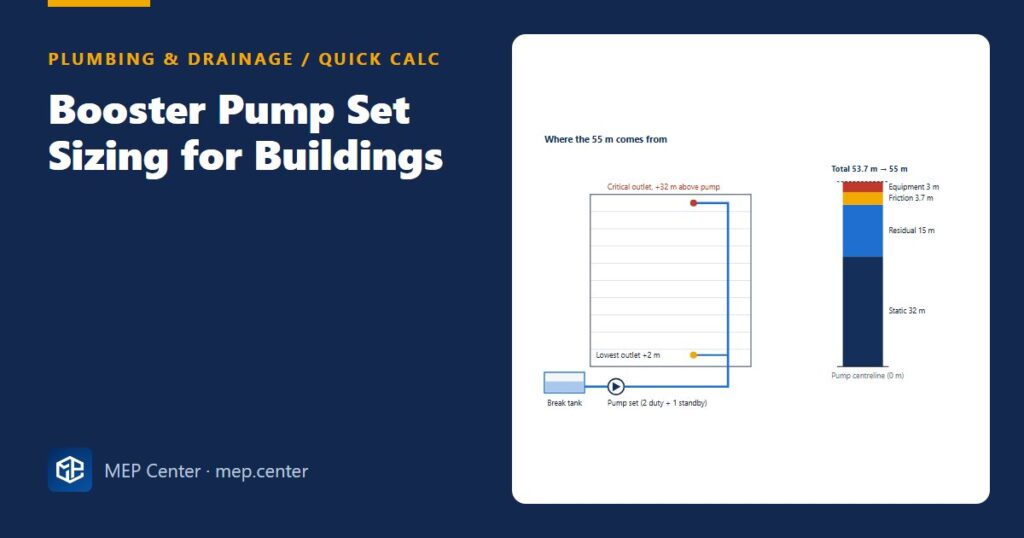
How to size a domestic water booster set: probable peak flow, the five parts of the pump head, duty/standby arrangement and power, with a worked example.
Booster Pump Set Sizing for Buildings Read More »