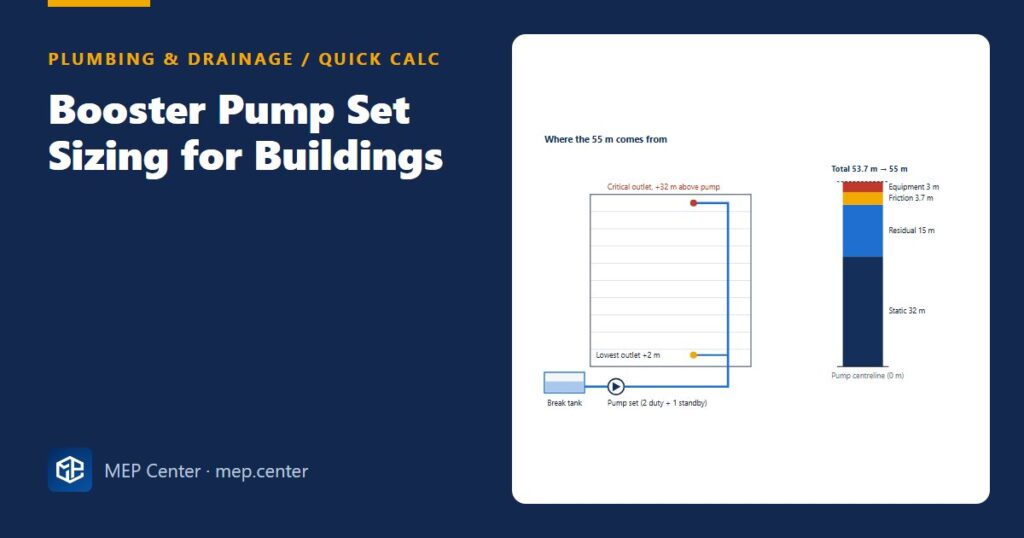
Booster Pump Set Sizing for Buildings
How to size a domestic water booster set: probable peak flow, the five parts of the pump head, duty/standby arrangement and power, with a worked example.
Booster Pump Set Sizing for Buildings Read More »

Practical, step-by-step MEP design guides with worked examples: sprinkler hydraulics, fire pumps, clean agent, heat loss, duct and pipe sizing, psychrometrics, VRF, fire alarm and electrical design.
How to size a domestic water booster set: probable peak flow, the five parts of the pump head, duty/standby arrangement and power, with a worked example.
Booster Pump Set Sizing for Buildings Read More »
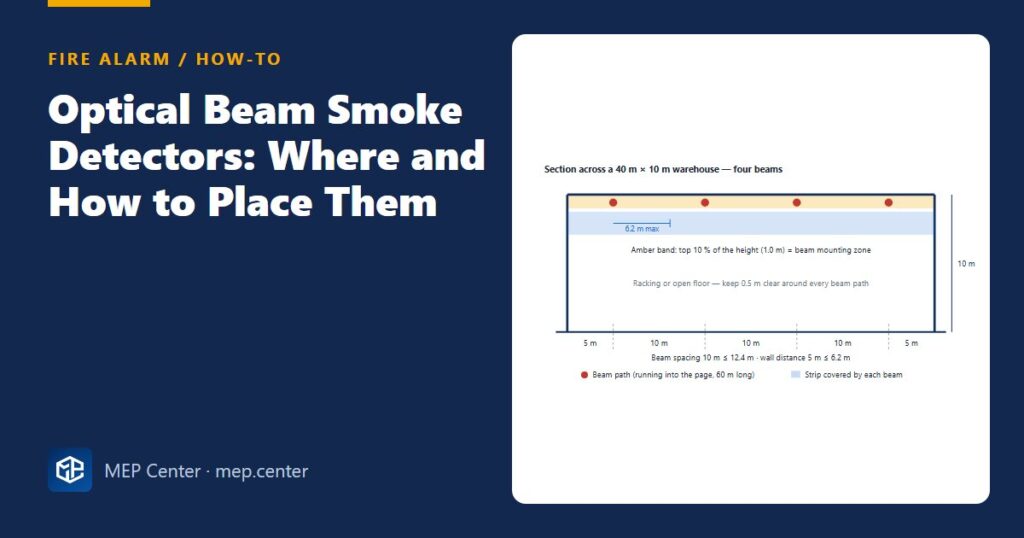
How to place optical beam smoke detectors in large spaces: spacing between beams, distance to walls, mounting height, rigid fixing and a worked warehouse example.
Optical Beam Smoke Detectors: Where and How to Place Them Read More »
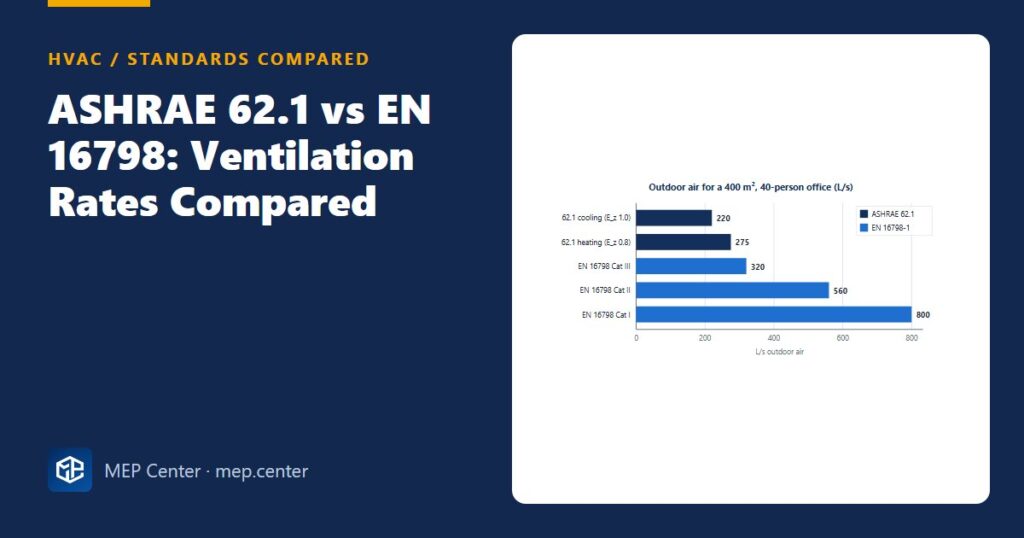
How ASHRAE 62.1 and EN 16798-1 set outdoor air rates, side by side, with the same 400 m² office calculated under both (220–275 L/s vs 560 L/s) and what the difference means on a project.
ASHRAE 62.1 vs EN 16798: Ventilation Rates Compared Read More »
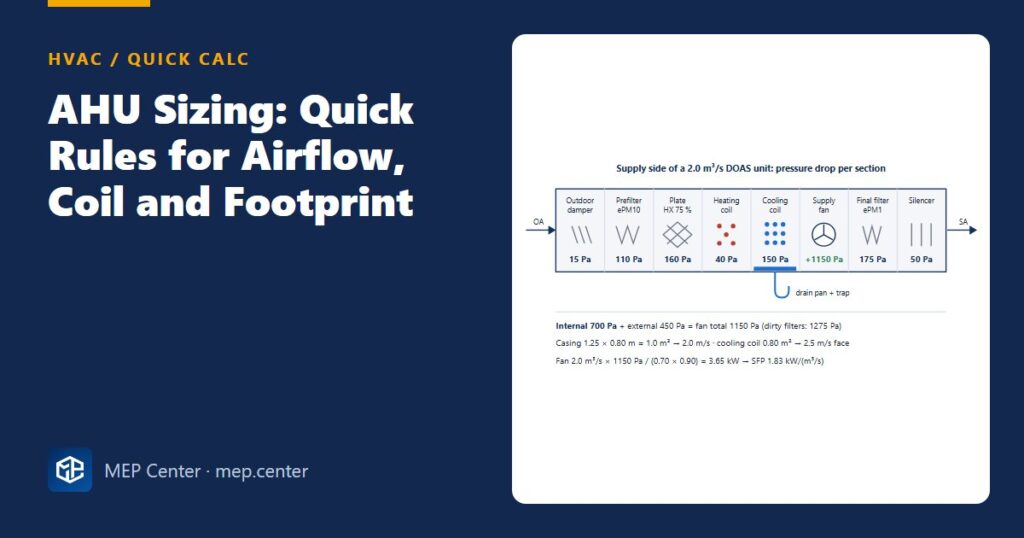
Quick rules to size an air handling unit before the selection software is open: airflow from the sensible load, casing and coil velocities, coil and fan duties and the plant room space, with a worked 2.0 m³/s DOAS example.
AHU Sizing: Quick Rules for Airflow, Coil and Footprint Read More »
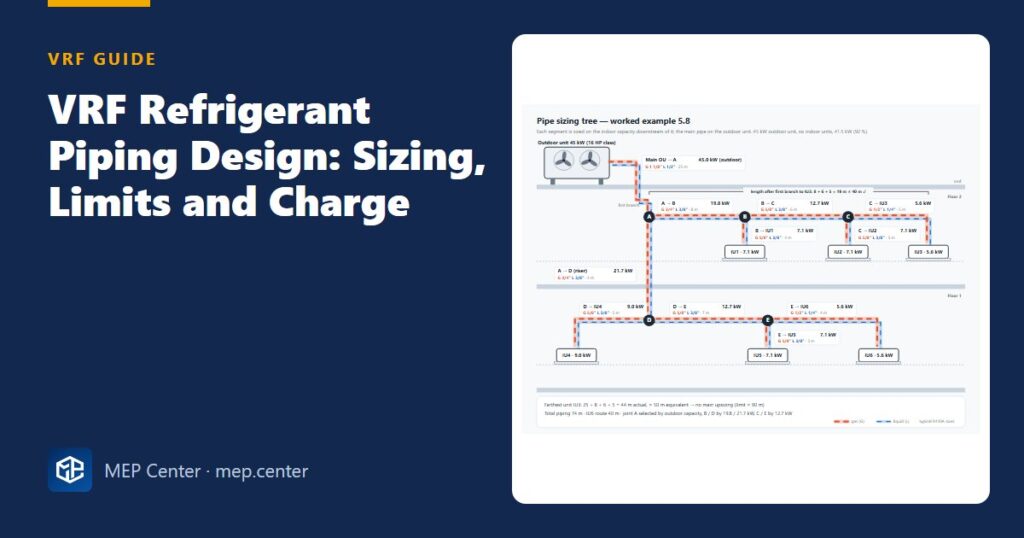
How to size VRF gas and liquid lines by downstream capacity, check the length and height limits that catch most designers, and calculate the additional refrigerant charge — with a full two-floor example.
VRF Refrigerant Piping Design: Sizing, Limits and Charge Read More »
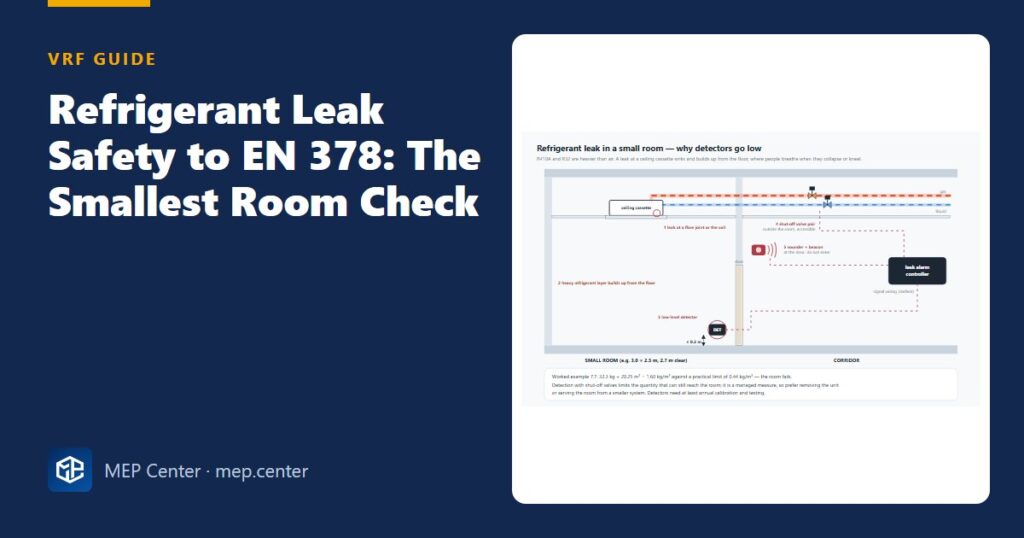
If the whole VRF charge leaks into the smallest room, is the concentration still safe? Here is the five-step EN 378 check, a worked store-room example that fails, and the fixes that work.
Refrigerant Leak Safety to EN 378: The Smallest Room Check Read More »
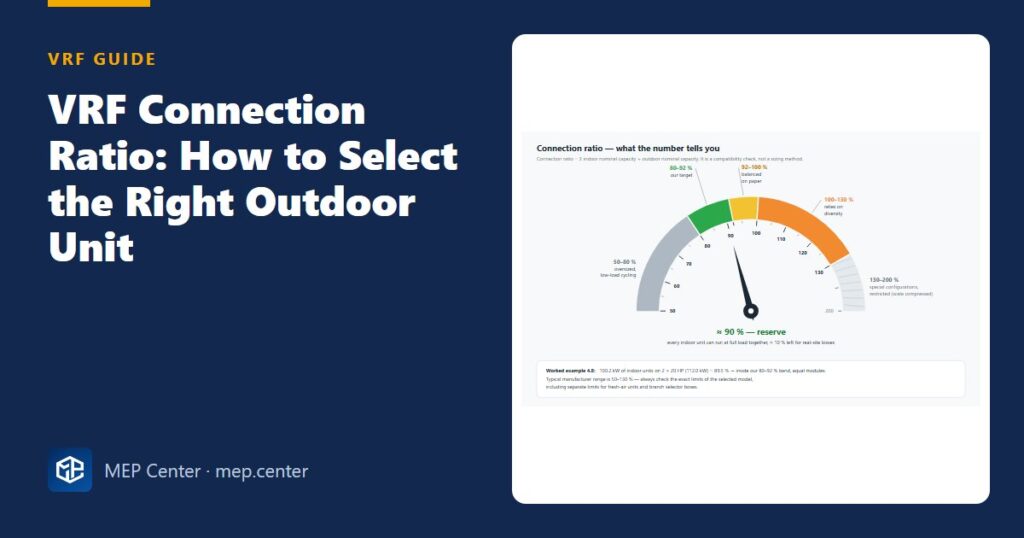
The connection ratio tells you whether an indoor/outdoor combination is allowed, not whether it is big enough. Here is the conservative rule we design with and a full outdoor unit selection you can copy.
VRF Connection Ratio: How to Select the Right Outdoor Unit Read More »
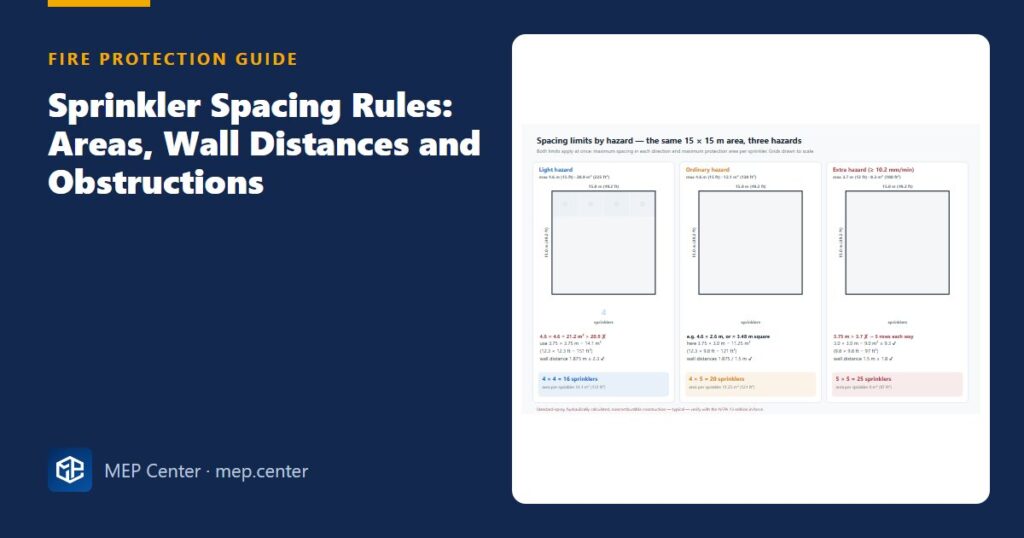
The NFPA 13 spacing and location rules for standard-spray sprinklers in one place, from S × L protection area to obstructions, with a worked 15 × 24 m office layout.
Sprinkler Spacing Rules: Areas, Wall Distances and Obstructions Read More »
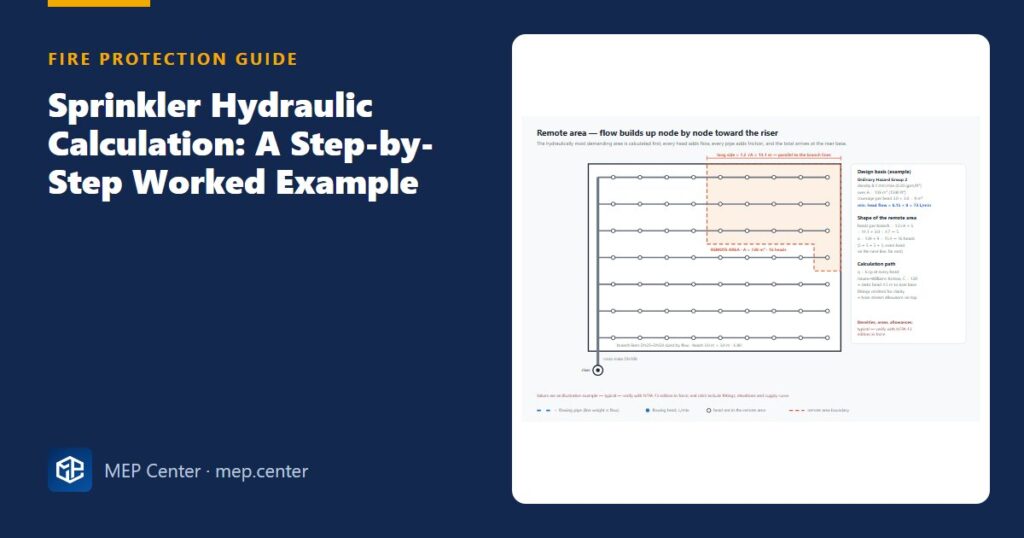
How to run a sprinkler hydraulic calculation by hand, from the most remote sprinkler to the supply, with a fully worked six-head OH2 example and supply check.
Sprinkler Hydraulic Calculation: A Step-by-Step Worked Example Read More »
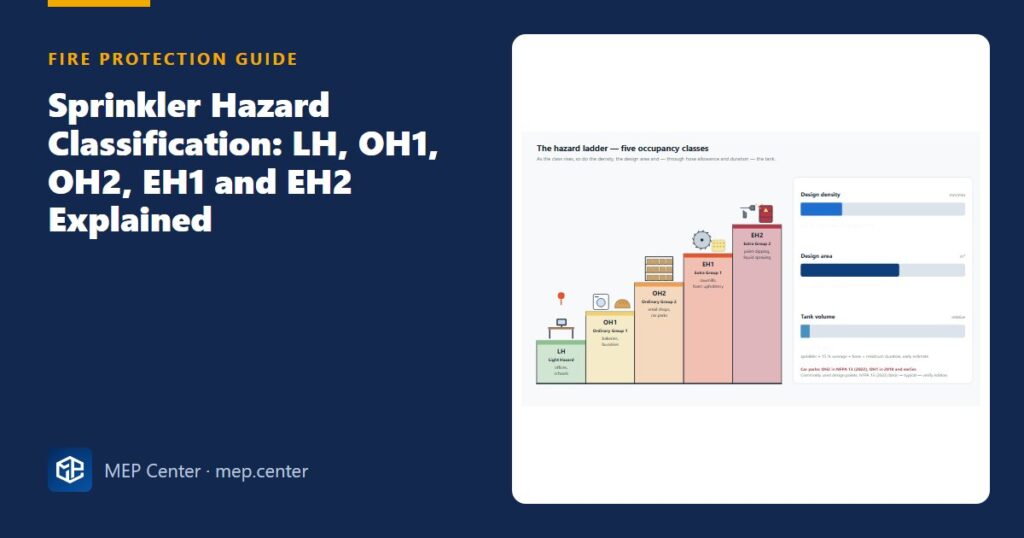
A practical guide to NFPA 13 occupancy hazard classes, with typical design values, a repeatable classification method and a worked example of how the class drives tank size.
Sprinkler Hazard Classification: LH, OH1, OH2, EH1 and EH2 Explained Read More »